Saturday Dec 23, 2017
Wordplay in the CDC, Scientology and Politics ft. Steven Martin
Speaking of Cults
A podcast about cults, coercive control and recovery. Formerly called the Sensibly Speaking podcast, in this weekly show host Chris Shelton interviews cult survivors, psychologists and other professionals and specialists about the topics of cult recruitment, retention and recovery. This also includes non-religious cults and extreme political movements including the more divisive elements of MAGA and left-wing culture war issues. There is nothing off-limits but we always try to be respectful of the people involved even if we do not respect the beliefs or actions involved.
Listen on:








Episodes
Episodes


Saturday Dec 16, 2017
Saturday Dec 16, 2017
This week, ex-Mormon Jonathan Streeter and I dive into the recent allegations of sexual abuse and inappropriate questioning in the Mormon church, and then compare/contrast this with what goes on in the Church of Scientology’s “security checks.”
The petition from Sam Young is here: https://www.gopetition.com/petitions/protect-the-children-stop-mormon-masturbation-interviews.html
Secretly recorded video of Mormon pastor: https://thoughtsonthingsandstuff.com/father-of-the-ward-vs-father-of-the-child/
The post Sensibly Speaking Podcast #121: Sexual Abuse & Confessionals in Cults ft. Jonathan Streeter appeared first on The Sensibly Speaking Podcast.
Saturday Dec 09, 2017
Saturday Dec 09, 2017
This week, comedian Ian Harris and I talk about his career as an atheist-based comedian, the skeptic/atheist community, humanism and current events in the media and how we see the good and bad in it.
The post Sensibly Speaking Podcast #120: Atheism, Skepticism and Comedy ft. Ian Harris appeared first on The Sensibly Speaking Podcast.
Saturday Dec 02, 2017
Saturday Dec 02, 2017
This week, I talk with Rachel Bernstein about co-dependency, a loaded term which needs some clarification and accurate definition. We discuss it from many angles including how this manifests in destructive cults.
Rachel’s website is here.
The post Sensibly Speaking Podcast #119: Codependency 101 ft. Rachel Bernstein appeared first on The Sensibly Speaking Podcast.
Saturday Nov 25, 2017
Saturday Nov 25, 2017
Language is a powerful force for communication and progress. However, it can also be used in hidden ways to change how we think. This week I talk with professor Steven Martin about the subtle and sometimes almost invisible use of language as a tool of thought manipulation and control.
The post Sensibly Speaking Podcast #118: How Language Can Control You ft. Steven Martin appeared first on The Sensibly Speaking Podcast.
Saturday Nov 18, 2017
Saturday Nov 18, 2017
This week, I feature Dr. Darrel Ray, psychologist, author, founder and president of the international organization Recovering from Religion, an organization dedicated to helping people deal with the consequences of leaving any religion.
Dr. Ray and I discuss current events with sexual harassment and assault accusations in the media, and the psychology and cognitive biases involved in this.
The post Sensibly Speaking Podcast #117: The Psychology of Sexual Abuse appeared first on The Sensibly Speaking Podcast.
Saturday Nov 11, 2017
Saturday Nov 11, 2017
Hello and welcome to the Sensibly Speaking Podcast.
This is a scripted episode and one that I did quite a bit of work on putting together, so I want your full attention. If you can see me on YouTube, you can see that I’m smiling when I say that, but we do have some serious issues to go over this week, which is why I’m calling this one “What is Wrong with the US.” I think that if you think about what I’m going to talk about here and extrapolate out some of these ideas, you might agree that some of what I’m talking about has a lot to do with a lot of things and this is not just a political or academic rant.
Recently I’ve done some work describing how bad actors can work behind the scenes to disrupt people they have chosen as adversaries and try to distract, annoy, anger or even radicalize them. Tory Magoo and I talked about how this happens in Scientology but I think anyone who has been watching the news lately is aware that these sorts of operations are global in nature and go far beyond Scientology’s Office of Special Affairs messing with Church critics.
There is a cultural problem we are in the midst of which assists and even reinforces these kind of covert activities and which makes us fight one another over things we really shouldn’t be fighting over. Now I get into trouble all the time because I make unwarranted assumptions about the good nature of people and how they can get along. Recently, I’ve had my eyes opened that that’s not always the case and that people who I thought were friends were in fact working against me behind the scenes. Not a big deal in the grand scheme of things. To me, the work I am doing is far more important than a few people who for whatever reason have it in their heads that I’m a bad guy. But this whole experience has had me looking both in a microcosm and macrocosm at how these conflicts can happen. Being a person who thinks a lot about how people think, and who wants to figure out how to use education and critical thinking to make the world an easier-to-live in place for everyone, my attention was drawn to a long and quite interesting article by Kurt Anderson, based on his book “Fantasyland: How America Went Haywire – A 500-Year History.” Now I don’t agree with everything in the article but it was long enough and had stuffed with enough interesting facts that I thought a podcast about it would definitely be in order. This is that podcast.
Kurt’s article in The Atlantic is titled “How America Lost Its Mind” and the path and conclusions that Anderson makes are not simpleton or politically partisan ideas. It’s the kind of article I like best – one that traces the origins of modern thought and culture back through recent history, showing how it’s always a large number of factors and incidents that come together like a series of dominoes falling down which lead us to where we are today. In fact, to make that analogy even more accurate, it would be multiple lines of dominoes from different directions which converge in the here-and-now and then keep going their separate ways and here we are trying to figure out what’s going on.
The US has gradually but very certainly become a country that does not really trust itself so much anymore. There are a lot of reasons for this, some valid and some totally crazy. We can go back in time as far as we want and find influencers, such as how the European and English feudal system created a classism that survives to this day in the haves and have-nots. How the Industrial Revolution and the independent spirit of inventors and entepreneurs brought about a lot of the problems with modern capitalism. Or we could talk about how religious minorities fleeing from religious persecution in Europe created a new country which was supposed to embody religious freedom but has now devolved into the same kind of persecution all over again in the vicious cycle of society’s pendulum swings. But for what ails the United States today, at least as far as this subject I’m talking about is concerned, we don’t have to go back that far. In fact, for many what I’ll talk about will still be in living memory and hopefully I’ll get enough of my facts straight to not offend too many people’s sensibilities. Then again, I kind of want to because some of the sensibilities we are hearing voiced today belong back in the 1800 and 1900s.
If we go straight to the guts of the situation, what we are dealing with is a society that doesn’t care about facts anymore. We are living in a post-fact, post-truth era, where up is down, freedom is slavery and the more clearly we view things through strictly black-and-white lenses, the more sure we are that we have it all figured out and everyone else is just plain nuts. Conspiracies are not just theories but are a way to describe a whole method of thinking and reasoning. There is almost no trust in any authorities, most definitely including those pillars of our society: government, organized religion and the media. And below all of this, running like stinky sewage pipes under a city beseiged by ignorance is a current of anti-rationalism or anti-intellectualism. This attitude that learned, intelligent people are the ones that should be trusted least and given the widest possible berth is everywhere, like that smell a skunk gives off which is damn near impossible to get off you. It just waftes around and stinks up everything.
So how does Anderson say that the US has lost its mind? And what does that even mean?
George Orwell talked about propaganda by redefinition of terms. If you can get societies or populations to redefine what they think about, then you can create new associations in their minds and use their emotional responses to guide and control them. As I’ve discussed in other podcasts, this sort of thing has been going on for centuries but not until recently have we had the ability to propagate ideas so rapidly and so far and wide. The internet is like the ultimate bullhorn. It doesn’t care what message is being pushed through it, but it can amplify that message to reach anyone and everyone within ear shot.
It’s therefore incumbent upon us as the receivers of those messages to be critical of what we hear and see. To not rely on any one source of information for anything. Hell, not even me. Because what’s happening is that we have been softened up to not think so well, to not be critical thinkers, and to have the very foundations of critical thinking attacked.
In his article, Anderson reminds us of when The Colbert Report first went on the air. “Stephen Colbert, playing his right-wing-populist commentator character, performed a feature called ‘The Word.’ His first selection: truthiness. ‘Now, I’m sure some of the ‘word police,’ the ‘wordinistas’ over at Webster’s, are gonna say, ‘Hey, that’s not a word!’ Well, anybody who knows me knows that I’m no fan of dictionaries or reference books. They’re elitist. Constantly telling us what is or isn’t true. Or what did or didn’t happen. Who’s Britannica to tell me the Panama Canal was finished in 1914? If I wanna say it happened in 1941, that’s my right. I don’t trust books — they’re all fact, no heart … Face it, folks, we are a divided nation … divided between those who think with their head and those who know with their heart … Because that’s where the truth comes from, ladies and gentlemen — the gut.”
That was supposed to be satire, but be honest. Haven’t you heard people on both ends of the political spectrum say things just like that in all seriousness? I have.
Anderson goes on: “Each of us is on a spectrum somewhere between the poles of rational and irrational. We all have hunches we can’t prove and superstitions that make no sense. Some of my best friends are very religious, and others believe in dubious conspiracy theories. What’s problematic is going overboard — letting the subjective entirely override the objective; thinking and acting as if opinions and feelings are just as true as facts. The American experiment, the original embodiment of the great Enlightenment idea of intellectual freedom, whereby every individual is welcome to believe anything she wishes, has metastasized out of control. From the start, our ultra-individualism was attached to epic dreams, sometimes epic fantasies — every American one of God’s chosen people building a custom-made utopia, all of us free to reinvent ourselves by imagination and will. In America nowadays, those more exciting parts of the Enlightenment idea have swamped the sober, rational, empirical parts. Little by little for centuries, then more and more and faster and faster during the past half century, we Americans have given ourselves over to all kinds of magical thinking, anything-goes relativism, and belief in fanciful explanation — small and large fantasies that console or thrill or terrify us. And most of us haven’t realized how far-reaching our strange new normal has become.
“Much more than the other billion or so people in the developed world, we Americans believe — really believe — in the supernatural and the miraculous, in Satan on Earth, in reports of recent trips to and from heaven, and in a story of life’s instantaneous creation several thousand years ago.
So how bad is this? It’s pretty bad. At first, I didn’t really want to believe how bad, but yeah – it’s not good. And it’s not just the state of our education system that has led us here, although I’m not letting the US Department of Education off the hook that easily because the corruption and mismanagement that have gone on at the state, local and federal education departments is astounding and constitutes what I believe to be a literal crime against humanity, namely the little humans who have no choice but to trust that us adults are acting in their best interests when we tell them what to do and how to think.
I could cite statistics for hours of the nonsense that 1/3 of Americans believe, including that global warming is a hoax perpetrated by scientists, government and journalists – as though any of these groups could ever agree on anything long enough to perpetuate a hoax of that scale. Then there’s the 1/3 who think that natural cancer cures are being actively hidden away by Big Pharma and the US government. Or the quarter of US citizens who think that Obama was the anti-Christ. It goes on and on.
Why is this? The simple answer is because what it means to be an American has been re-defined over the past fifty years and the institutions and organizations which once held some of this nonsense in check have now become the purveyors of this nonsense. Yes, academia and universities are definitely part of this picture, but so is the media, our government, corporations, professional associations and think tanks on both sides of the political spectrum.
Another quote from Anderson’s article:
“A senior physician at one of America’s most prestigious university hospitals promotes ‘miracle cures’ on his daily TV show. Cable channels air documentaries treating mermaids, monsters, ghosts, and angels as real. When a political-science professor attacks the idea ‘that there is some ‘public’ that shares a notion of reality, a concept of reason, and a set of criteria by which claims to reason and rationality are judged,’ colleagues just nod and grant tenure. The old fringes have been folded into the new center. The irrational has become respectable and often unstoppable.
“Our whole social environment and each of its overlapping parts — cultural, religious, political, intellectual, psychological — have become conducive to spectacular fallacy and truthiness and make-believe. There are many slippery slopes, leading in various directions to other exciting nonsense. During the past several decades, those naturally slippery slopes have been turned into a colossal and permanent complex of interconnected, crisscrossing bobsled tracks, which Donald Trump slid down right into the White House.”
People have said lately, and I’m one of them, that it’s social media that is the problem. Or the internet in general. Or no, it’s political corruption. It’s term limits. It’s taxes. “It’s the economy, stupid.” It’s Russian interference. It’s the liberals. It’s the conservatives. Well, no, it’s not really any one of these things that caused our problems in thinking. It’s a bit deeper than that. As Anderson puts it in his article:
“The great unbalancing and descent into full Fantasyland was the product of two momentous changes. The first was a profound shift in thinking that swelled up in the ’60s; since then, Americans have had a new rule written into their mental operating systems: Do your own thing, find your own reality, it’s all relative.
“The second change was the onset of the new era of information. Digital technology empowers real-seeming fictions of the ideological and religious and scientific kinds. Among the web’s 1 billion sites, believers in anything and everything can find thousands of fellow fantasists, with collages of facts and ‘facts’ to support them. Before the internet, crackpots were mostly isolated, and surely had a harder time remaining convinced of their alternate realities. Now their devoutly believed opinions are all over the airwaves and the web, just like actual news. Now all of the fantasies look real.”
Good people do good things in an effort to create good results. Sometimes we don’t see the long-term consequences of our actions and never was that more true than in the 1960s. The counter-culturists and the people trying to maintain what they thought was the status quo both felt they were fighting the good fight. The tight-fitting morality and conservatism of the 1950s didn’t really know how to react to the groovy liberalism of the 1960s and the clashes over these values and what those values were doing in the real world led to not just broken families and angry teens but actual violence in both the streets and universities of the US as well as the swamps and jungles of Vietnam. The politics of it all and who was right and who was wrong don’t really matter so much at this point, it’s the attitudes and ideas that emerged from that conflict that I’m talking about. The counter-culture pushback against authority figures, the government and “The Man” led to a similar pushback against anything the hippies thought represented that authority including rationality, reason, science and reality itself.
To quote Anderson again:
“Delusional conspiracism wouldn’t spread quite as widely or as deeply on the left, but more and more people on both sides would come to believe that an extraordinarily powerful cabal—international organizations and think tanks and big businesses and politicians—secretly ran America.”
“After the ’60s, truth was relative, criticizing was equal to victimizing, individual liberty became absolute, and everyone was permitted to believe or disbelieve whatever they wished. The distinction between opinion and fact was crumbling on many fronts.”
That attitude has just carried forward throughout my lifetime. On a societal level, where does the belief in something as absurd as Scientology come from? It comes from this pushback against scientific or rational thinking. Hubbard himself, always with his thumb out to measure the prevailing winds of cultural attitudes, wrote that what’s true for you is what’s true and even said that was what constituted your personal integrity. We certainly do have the right to believe whatever we want, but shouldn’t at least some of those beliefs be challenged a bit more vocally when they lead to the kinds of child abuse, violence and financial crimes that Scientology has gotten away with for over 60 years?
The media has simply reflected and magnified this back at us. If the stories we watched or read didn’t sell, if we ourselves didn’t give them credence and importance, then the news media would not operate the way it does. The fact that we are fed lies and nonsense by an ever-more-partisan news media conglomerate is actually a vicious circle we are contributing to and not merely victims of. When Reagan cancelled the Fairness Doctrine in the 1980s, who stood up and said “That’s insane. We demand fairness in our news media?” If anyone did, they didn’t shout it hard enough or long enough and soon after we got the likes of Rush Limbaugh and Sean Hannity to tell us not just what happened, but what to think about it too, with people like Roger Ailes and Rupert Murdoch acting as puppet masters behind the scenes. If you think that kind of power doesn’t corrupt these kinds of people, I have some Scientology courses I’d like to sell you.
As Anderson goes on to say in his article:
“Then the internet – After the ’60s and ’70s happened as they happened, the internet may have broken America’s dynamic balance between rational thinking and magical thinking for good.”
And because of this irrationality and magical thinking, we are being taken advantage of by our leaders. The people who are in power now know full well that it’s not facts and evidence and reasonable arguments that are going to sway voters. As we’ve already seen, large swaths of the population are gullible and will believe absolute nonsense simply because it feels good to do so. In fact, that magical thinking soon results in an inability to discern reality from fantasy. When you get these kinds of people angry or frightened and on your side, you can easily win elections. And we keep falling for it, over and over and over again, because we’re suckers who fall for the propaganda we are fed instead of taking the time to actually find out what is really going on.
Granted complete freedom of thought, Thomas Jefferson and other Enlightenment era intellectuals assumed, most people would follow the path of reason. Wasn’t it pretty to think so. Unfortunately, we just aren’t built that way. Our default position is not logic or reason. It’s go with what feels good and use our intelligence to justify why we feel that way. So now we are at a very dangerous place, where we can all believe whatever we want, because we think pretty much everything is equally true and false.
So what do we do about this? Here’s part of what Anderson suggests:
“It will require a struggle to make America reality-based again. Fight the good fight in your private life. You needn’t get into an argument with the stranger at Chipotle who claims that George Soros and Uber are plotting to make his muscle car illegal — but do not give acquaintances and friends and family members free passes. If you have children or grandchildren, teach them to distinguish between true and untrue as fiercely as you do between right and wrong and between wise and foolish.”
Because we are surrounded by so much information and it’s so easy to get at it, we’ve become information-lazy at the exact time we should be information-smart. We need to figure out new ways to deal with fake news and propaganda which appears to be informing us but is really simply controlling our minds. There is no way around this except to engage in critical thinking, to not fall into partisan pandering on either end of the political spectrum but to think for ourselves and know when someone is trying to con us. It’s not easy. In fact, it’s damn hard.
Here’s my final quote from Anderson’s article:
“America was created by true believers and passionate dreamers, and by hucksters and their suckers, which made America successful — but also by a people uniquely susceptible to fantasy, as epitomized by everything from Salem’s hunting witches to Joseph Smith’s creating Mormonism, from P. T. Barnum to speaking in tongues, from Hollywood to Scientology to conspiracy theories, from Walt Disney to Billy Graham to Ronald Reagan to Oprah Winfrey to Trump. In other words: Mix epic individualism with extreme religion; mix show business with everything else; let all that ferment for a few centuries; then run it through the anything-goes ’60s and the internet age. The result is the America we inhabit today, with reality and fantasy weirdly and dangerously blurred and commingled.”
I’d be very happy to see what you think about what I’ve said here today. What do you think about these factors I’ve laid out and what do you think are the solutions to these issues? I hope to hear from you in the comments section of this podcast. I appreciate you taking the time to listen to me ramble on here about all this and I hope that I at least got you thinking, even if you don’t agree with everything I said here today. So long and I’ll see you next week.
Link to Kurt Anderson article: https://goo.gl/ZAJK34
The post Sensibly Speaking Podcast #116: What’s Wrong with the US appeared first on The Sensibly Speaking Podcast.
Saturday Nov 04, 2017
Saturday Nov 04, 2017
This week, I did a live stream on YouTube to discuss Scientology’s concept of “clearing the planet,” how that is discussed by L. Ron Hubbard in his policies and what that meant to me and others when we were still involved with the Church.
The post Sensibly Speaking Podcast #115: Scientology “Clearing the Planet” appeared first on The Sensibly Speaking Podcast.
Saturday Oct 28, 2017
Saturday Oct 28, 2017
This week, former IBLP/ATI member Andrew Forlines and I discuss the Bill Gothard Christian cult, homeschooling, politics and a lot more. Enjoy our free-ranging and hopefully somewhat interesting conversation!
The post Sensibly Speaking Podcast #114: Gothard’s Cult, Homeschooling and More appeared first on The Sensibly Speaking Podcast.
Your Host
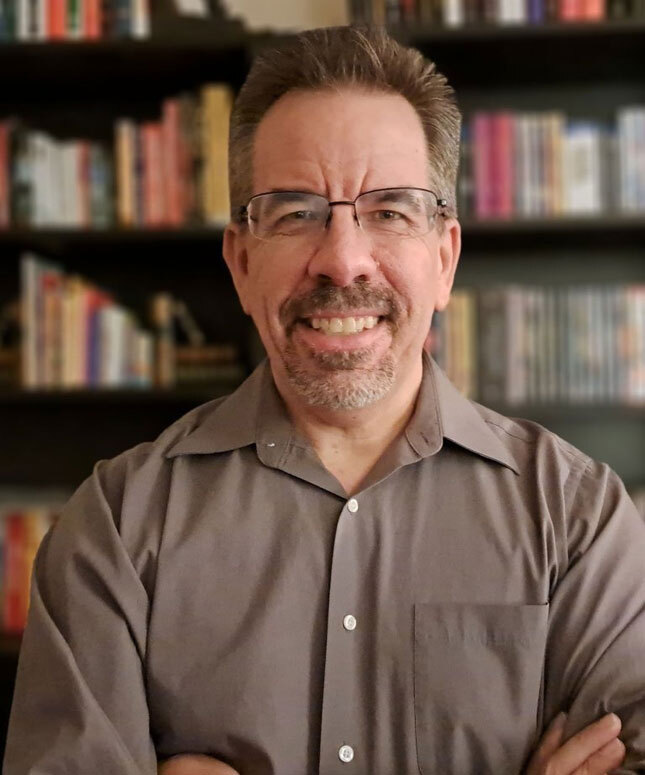
Hello, my name is Chris Shelton and I am an author, consultant, podcaster, videographer, and former cult member. Welcome to my podcast!
Who is Chris Shelton?
Chris started a YouTube channel which has over 45,000 subscribers, produces the Sensibly Speaking podcast each week and has produced hundreds of videos laying out the scam of Scientology, educating on critical thinking and interviewing former members of Scientology and other destructive cults, as well as a range of therapists, cult exit counselors, educators and media personalities. Chris has also given talks and presentations around the United States about his experiences and has been featured on numerous podcasts and television shows. He was featured on Leah Remini’s Scientology and the Aftermath on A&E and served as a consultant to the show for its first two seasons. He has also written a critical analysis of Scientology and L. Ron Hubbard called Scientology: A to Xenu – An Insider’s Guide to What Scientology is Really All About, available on Amazon in printed form, e-book format and as an audio book.